Products

results found

Previous searches:

Ventilation filter requirements for Flexit ventilation units

The right ventilation filter provides cleaner air, stable operation, and lower energy consumption. That’s why Flexit recommends filters that are tested and documented for use in Flexit ventilation units.
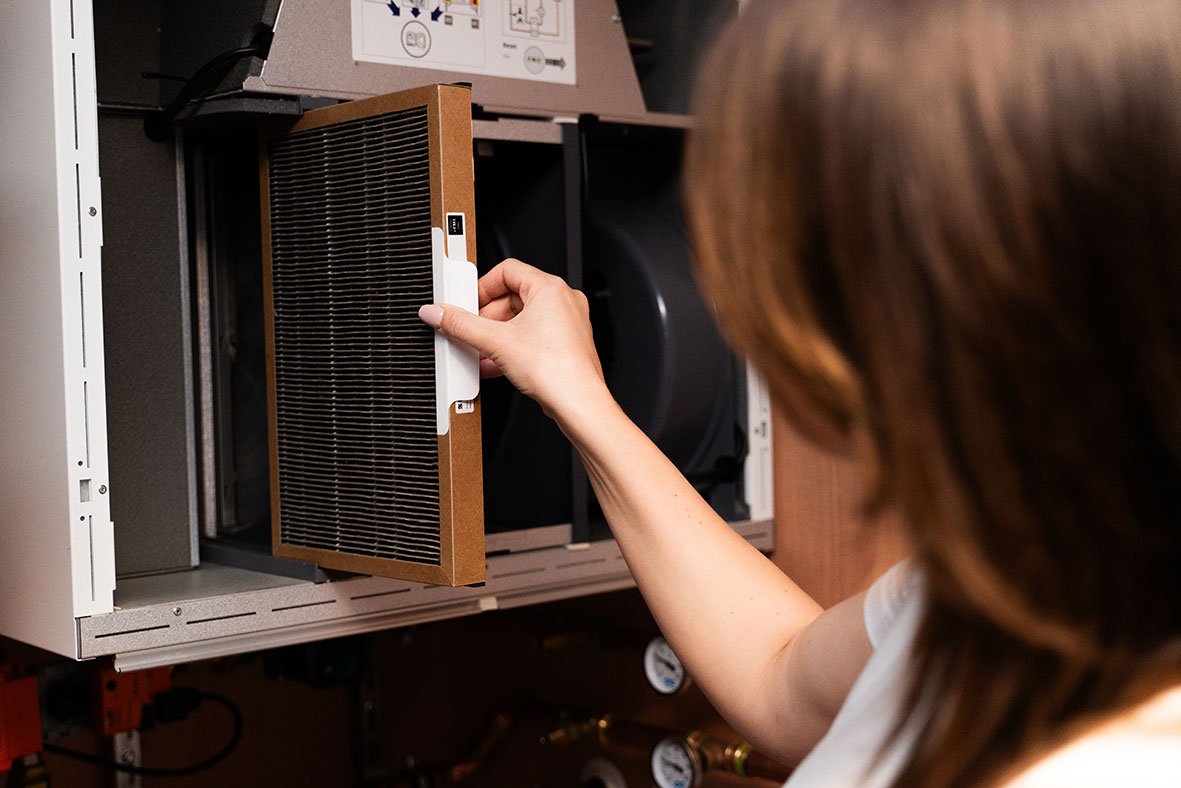
Person replacing a filter in a ventilation unit.
The filter is removed from the ventilation unit as part of routine maintenance. The image shows correct handling of the filter frame and easy access to the service area.

Why choose quality filters?

A ventilation filter does more than just trap dust. It protects both people and technical components. This is equally important for homeowners, contractors, maintenance personnel, and distributors.

  • Better air quality: The filter captures pollutants pollen, and particles that would otherwise enter the home or building.
  • Lower energy consumption: The right Flexit filter provides stable, calculated pressure drop—ensuring optimal operation and reduced power consumption.
  • Longer service life: When the filter meets requirements throughout its entire service period, both efficiency and the lifespan of the ventilation unit are improved.
  • Compliance with requirements: Using the wrong filter may violate energy labeling, Ecodesign regulations, and technical standards.
  • Fewer operational issues: Incorrect filters can cause system imbalance, moisture problems, increased fan wear, and in the worst case, equipment damage.

This is what a ventilation filter must meet

Choosing the right ventilation filter is about documentation, test results, and proper fit—not price. All Flexit filters must meet the following requirements:

Filter class
Meet ePM1 50–85% for both supply and extract air, documented through accredited laboratory testing.

Performance over time
Maintain filtration efficiency throughout the entire service life (typically 6–12 months). Performance measured only on a new filter is not sufficient documentation.

Quality assurance and testing
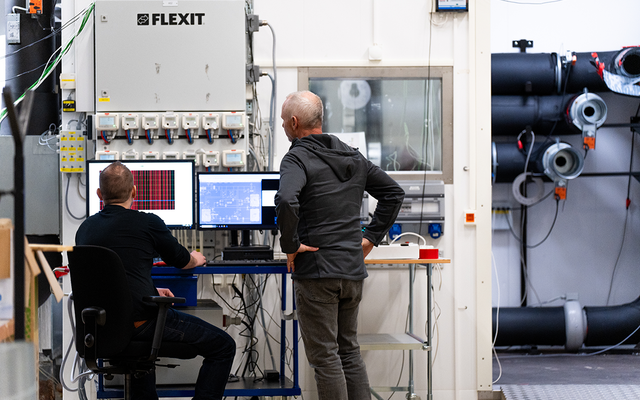
Ensure consistent production quality and be tested in the specific Flexit ventilation unit. This guarantees correct pressure drop, service life, and function under real operating conditions.

Pressure drop and sealing
Pressure drop, fit, and sealing around the filter must be tested and documented to prevent air leakage and imbalance in airflow.

Eurovent certification
Please note that general Eurovent certification alone is not sufficient. The filter must be tested in the relevant Flexit ventilation unit to ensure correct real-world performance.


Consequences of using the wrong filter

Using unsuitable filters can lead to several well-known issues:

  • Poor air quality: Less effective filtration allows more pollen, dust, and pollutants to enter the home or building.
  • Increased energy consumption: Low-quality filter materials clog more quickly, increasing pressure drop.
  • Imbalance and moisture risk: Incorrect pressure drop can cause unbalanced airflow and increase the risk of condensation and moisture damage.
  • Wear and operational faults: Fans and heat recovery components must work harder, reducing their service life.
  • Warranty and claims issues: Using the wrong filter may affect warranty conditions and the basis for product claims.

That’s why the filter must be tested in the correct ventilation unit

Filters that appear similar or have the same filter class can behave very differently in a ventilation unit.
Residential ventilation units have compact physical dimensions and demanding airflow conditions, making laboratory testing alone insufficient.

The filter must:

  • be tested under real operating conditions in the specific Flexit ventilation unit
  • deliver the required filtration efficiency with the lowest possible pressure drop
  • ensure stable airflow rates as designed and balanced for the system

This ensures the correct indoor climate, low energy consumption, and stable operation—while reducing the risk of imbalance, moisture issues, and technical damage.

Multiple industry sources and recommendations from independent organizations emphasize the importance of choosing quality filters over low-cost alternatives. This applies equally to health, technical performance, and energy efficiency.